Why Do I Look Older Than My Age? A Practical Guide to Facial Age Cues
A clear, evidence-aware checklist for the facial, lifestyle, and photo factors that can make your apparent age read older than your real age

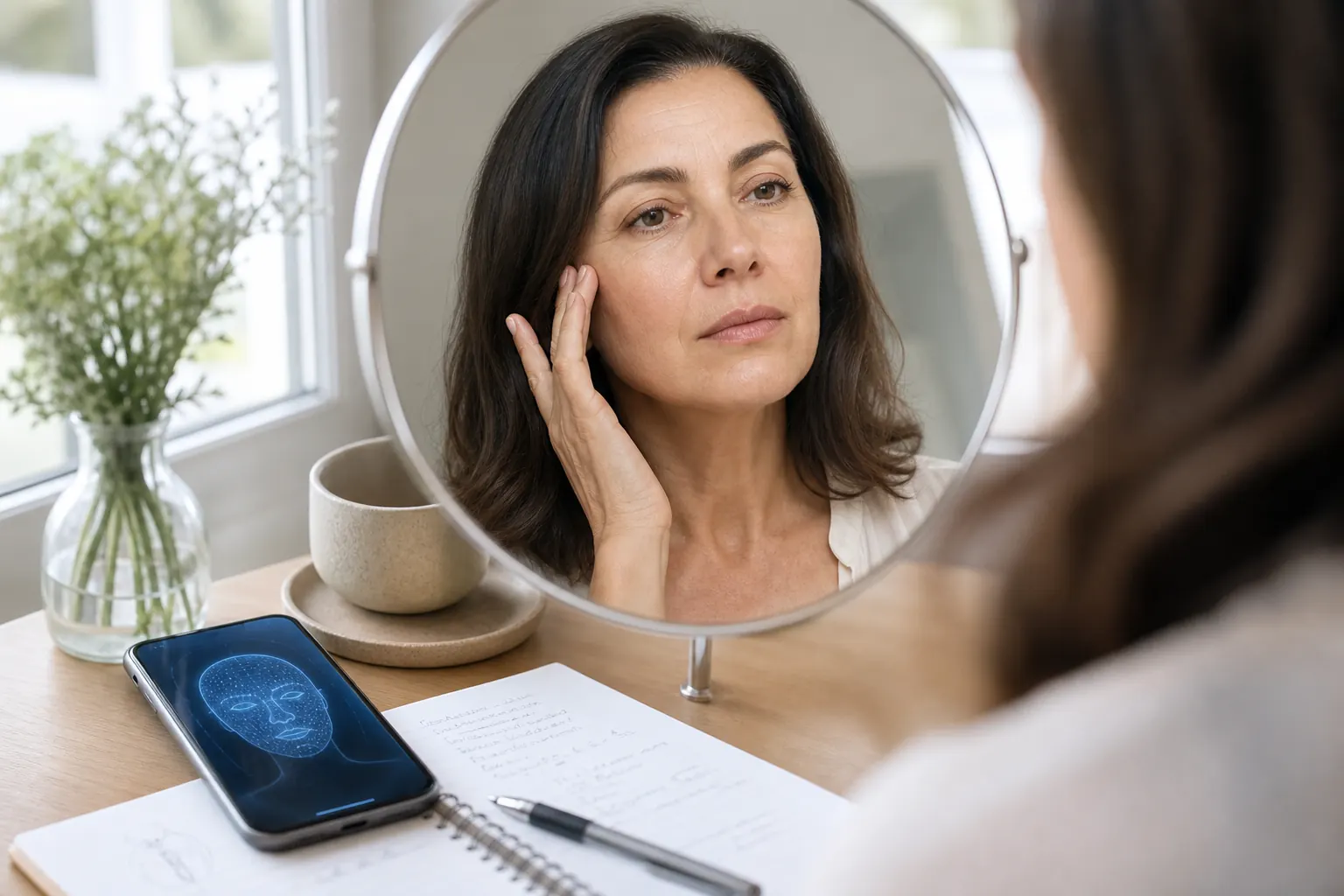
If you have ever looked at a photo and thought, "Why do I look older than my age?", the first thing to know is that apparent age is not a verdict on your health or attractiveness. It is a visual estimate. People and AI systems read a combination of skin texture, contrast, eye area, facial fullness, expression, hairstyle, and lighting. This guide helps you separate what is probably a photo problem from what may be a real lifestyle or skin-aging signal.
Quick Self-Check: Is It Your Face, the Photo, or the Week You Had?
Before you assume your face has changed permanently, compare a few clues. The fastest way to avoid overreacting is to separate stable signals from temporary ones.
| Clue | Usually temporary | More persistent |
|---|---|---|
| Under-eye darkness | Poor sleep, allergies, salt, dehydration | Genetics, hollowing, pigmentation |
| Skin texture | Dryness, irritation, bad lighting | Sun damage, scarring, long-term collagen loss |
| Face shape | Camera angle, lens distortion, water retention | Weight change, natural volume loss |
| Expression | Stress, squinting, awkward selfie timing | Habitual tension, posture, brow position |
| AI age result | Changes 5+ years between photos | Similar estimate across several good photos |
The Main Reasons You May Look Older Than Your Age
Most perceived-age changes come from a small set of high-signal areas. Some are biological, some are lifestyle-related, and some are completely fixable in the next photo.
Sun exposure and uneven tone
UV exposure can make skin look older by increasing uneven pigmentation, rough texture, fine lines, and dullness. Daily sunscreen is one of the highest-impact prevention habits.
Under-eye shadows and eyelid heaviness
Dark circles, puffiness, hollowing, and tired eyes are read quickly as age cues. Sleep, allergies, dehydration, salt, and genetics can all contribute.
Expression and facial tension
A flat, tense, or downward expression can add perceived years. A relaxed jaw, lifted posture, and natural smile often change age estimates immediately.
Sleep debt and stress
Poor sleep and stress can affect eye brightness, skin barrier quality, inflammation, and facial tension. The result often looks like sudden aging, even when it is temporary.
Facial volume changes
Weight changes, low body fat, dehydration, and natural aging can make cheeks or temples look flatter. Volume changes often affect apparent age more than a single wrinkle.
Harsh camera conditions
Overhead light, wide-angle phone lenses, low resolution, and unflattering angles can exaggerate texture and shadows. A better photo can produce a much fairer age reading.
Why You May Look Older in Photos Than in Real Life
Photos freeze one fraction of a second. Real life gives people motion, expression, voice, posture, and context. A single photo can catch you with compressed skin, a downward mouth angle, a squint, or light that throws deep shadows under the eyes.
Phone cameras also distort faces at close range. A selfie taken too near the face can enlarge the nose, narrow the sides of the face, and make texture more obvious. If an AI age tool gives a result that feels too old, retake the image with front-facing daylight, a relaxed expression, and the camera slightly farther away.
Try a cleaner test
For a more useful result, compare two or three well-lit photos instead of judging yourself from one bad frame. You can use our photo-focused guide here: guess my age from photo.
What to Change First If You Look Older Than Your Age
Start with changes that affect the most visible signals and are low-risk. The goal is not to chase a perfect age number; it is to remove avoidable age cues.
- Improve the next photo setup - Use window light, clean the lens, move the phone farther away, keep the camera around eye level, and avoid harsh overhead light.
- Protect skin from UV - Use broad-spectrum SPF consistently. UV damage is one of the best-supported causes of visible premature skin aging.
- Address sleep and hydration - If your older-looking phase appeared suddenly, check sleep, water intake, alcohol, salt, allergies, and stress before assuming permanent aging.
- Soften grooming and styling cues - Hair shape, brow grooming, facial hair, glasses, and clothing contrast can all change perceived age. Small styling changes can make the face read more balanced.
- Track patterns, not one result - If AI or friends consistently estimate you older across many good photos, look for repeated cues such as eye shadows, texture, posture, or expression.
For a practical action plan focused on photos and low-risk habits, continue with how to look younger.
When Looking Older May Deserve Professional Advice
This page is general education, not medical advice. But if you notice sudden facial swelling, rapid weight loss, new severe fatigue, dramatic skin changes, or a change that worries you, it is reasonable to speak with a qualified clinician.
For skin-specific concerns, a dermatologist can help distinguish normal texture, sun damage, acne scarring, pigmentation, and irritation. For cosmetic treatments, ask about risks, recovery, realistic outcomes, and whether simpler habits should come first.
How to Use an AI Age Reading Without Overthinking It
An AI age guesser estimates apparent age from visible image cues. It does not know your biological age, lifestyle, genetics, or medical history. Treat the number as a mirror for one photo, not as a permanent label.
The best use is comparison: test a harsh selfie, then a better-lit portrait, then a relaxed expression. If the number changes a lot, your photo conditions are driving the result. If it stays older, review the stable facial cues explained in our science guide: how old do I look science guide.
Bottom Line
Looking older than your age usually comes from multiple small cues: texture, shadows, expression, light, sleep, stress, and facial volume. Start by improving photo conditions and daily skin protection, then look for repeated patterns across several images. A good AI age result should help you notice visual cues, not make you panic about one unflattering photo.
Frequently Asked Questions
References
- American Academy of Dermatology guidance on preventing premature skin aging: AAD skin aging prevention
- BMJ research linking perceived age with survival in a twin cohort: Perceived age and survival
- Randomized trial evidence that daily sunscreen can slow visible skin aging: Daily sunscreen and skin aging